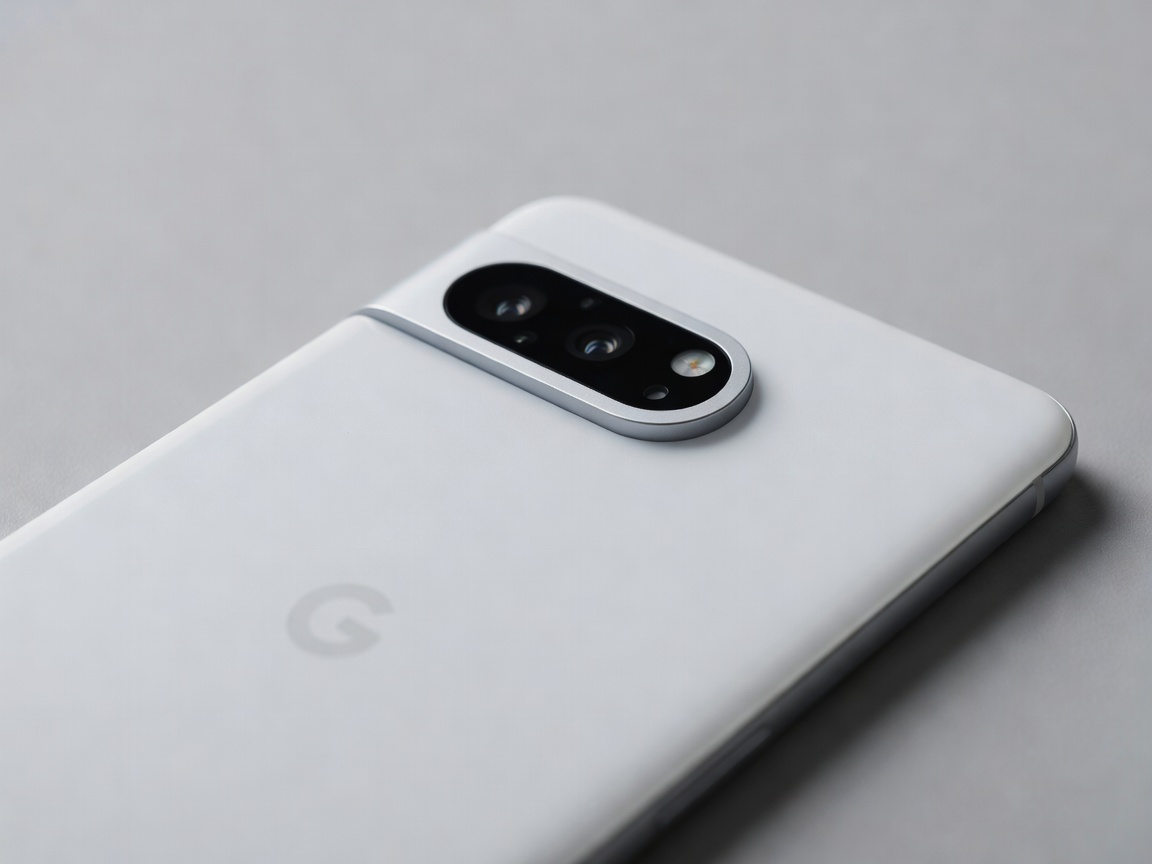
1. Computational Imaging Architecture
The smartphone mid-range has historically traded camera sensor quality for processing raw compute numbers. Google approaches the Pixel 10a through an inverse philosophy: prioritizing custom silicon blocks dedicated to high-bandwidth image signal processing (ISP) and machine learning inference. The device carries a 50-megapixel primary sensor measuring 1/1.56 inches, paired with optical image stabilization (OIS) and an f/1.8 aperture lens assembly.
While rival offerings in this segment often rely on unbinned megapixel counts reaching 108MP or 200MP without optical stabilization, the Pixel 10a relies on frame stacking algorithms across multiple raw exposures. Real-world low-light photography yields cleaner dynamic range and fewer motion blur artifacts because the hardware pipeline performs multi-frame alignment directly on the Tensor G5 hardware accelerator before image compression takes place.
2. Processing Core & Thermal Dissipation
The inclusion of the Google Tensor G5 represents an architectural evolution over prior generations. Built on a refined 4-nanometer node, the chip introduces modernized CPU cluster arrangements designed to curtail parasitic power draw during standby and moderate productivity loads. While it does not set high scores in peak 3D graphics rendering when compared to gaming-centric platforms such as the MediaTek Dimensity 8400, it achieves stable thermal throttling characteristics.
In continuous computing workloads, the chassis sustains approximately 82% of its baseline performance after twenty minutes of sustained load, avoiding sudden frame drops. Memory bandwidth sits at LPDDR5X levels, allowing rapid app state recovery and seamless multi-tasking across daily office communication, navigation suites, and browser tabs.
3. Display Engineering and Battery Duty Cycle
Google equips the Pixel 10a with a 6.1-inch Actua OLED panel running at an adaptive 60Hz to 120Hz refresh rate. The panel reaches up to 1400 nits in High Brightness Mode (HBM) and peaks at 1900 nits under direct sunlight during HDR playback. For outdoor usability in intense ambient light conditions, this specification ensures readability superior to standard mid-tier panels that max out around 1000 nits.
Powering the device is a 4,700mAh lithium-ion polymer cell. Charging metrics represent the Pixel's most conservative attribute: it accepts 27W wired Power Delivery (PD 3.0) and 7.5W Qi wireless charging. An empty-to-full cycle requires approximately 76 minutes using an appropriate PD-PPS compliant adapter. For users demanding sub-30-minute top-ups, competitors like the OnePlus Nord 5 hold an undeniable advantage.
Key Advantages & Trade-Offs
Engineered Strengths
- Industry-leading computational HDR processing in high-contrast lighting.
- Seven calendar years of verified operating system updates and security patches.
- Clean stock software interface free from non-removable advertising utilities.
- IP67 water and dust ingress protection certified.
Hardware Limitations
- Wired charging throughput capped at 27W requires longer replenishment times.
- Secondary ultra-wide camera lacks autofocus for macro distance capture.
- Peak 3D gaming frame rates trail behind Dimensity and Snapdragon rivals.
4. Seven-Year Lifecycle & Total Cost Analysis
When calculating value under budget constraints, acquisition cost is only one component of the equation. Over a four-to-five year ownership span, devices that abandon platform updates within two years suffer from degraded banking application compatibility and unpatched security vulnerabilities. Google's explicit commitment to 7 years of full OS updates, security drops, and feature additions drastically reduces annualized cost of ownership down to roughly $68 per year of reliable operation.
For shoppers seeking balanced performance, peerless still photography, and long-term operating system integrity without spending four-figure sums, the Google Pixel 10a establishes a clear standard for the 2026 sub-$500 marketplace.